

Call Us when you Need Help!
What Are Dental Bridges?
Dental bridges are fixed dental restorations used to replace one or more missing teeth by bridging the gap between healthy teeth. A bridge typically consists of artificial teeth (pontics) anchored to adjacent natural teeth or dental implants, restoring both function and appearance.
At Oronova Dental Care, we provide personalized dental bridge solutions designed to restore your smile, chewing function, and overall oral health.
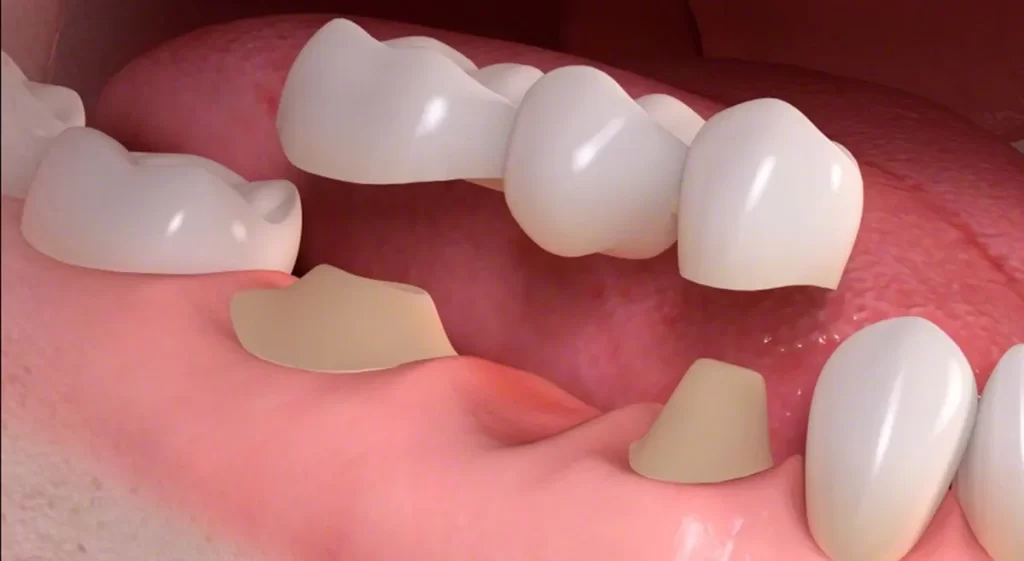
Bridges help you:
- Chew and speak properly without difficulty.
- Maintain the shape of your face and prevent a sunken appearance.
- Prevent remaining teeth from shifting into the gap, which could lead to bite problems.
- Restore a natural-looking smile, improving confidence and aesthetics.
Dental bridges are a long-lasting and effective solution for missing teeth when maintained properly
When is a Dental Bridge Required?
A dental bridge is recommended when one or more teeth are missing, and you want to restore function, appearance, and oral health. Missing teeth can lead to problems such as shifting of adjacent teeth, bite issues, difficulty chewing, and changes in facial structure.
Common Situations Requiring a Dental Bridge:
- One or more missing teeth in a row.
- Healthy adjacent teeth that can support a bridge.
- Difficulty chewing or speaking due to missing teeth.
- Desire to restore a natural-looking smile and prevent facial sagging.
- To maintain proper alignment of remaining teeth and prevent bite problems.
Your dentist will evaluate your oral health and recommend a bridge if it’s the best solution to restore function and aesthetics.
Types of Dental Bridges
Dental bridges are designed to replace missing teeth using different techniques, depending on your needs and oral condition.
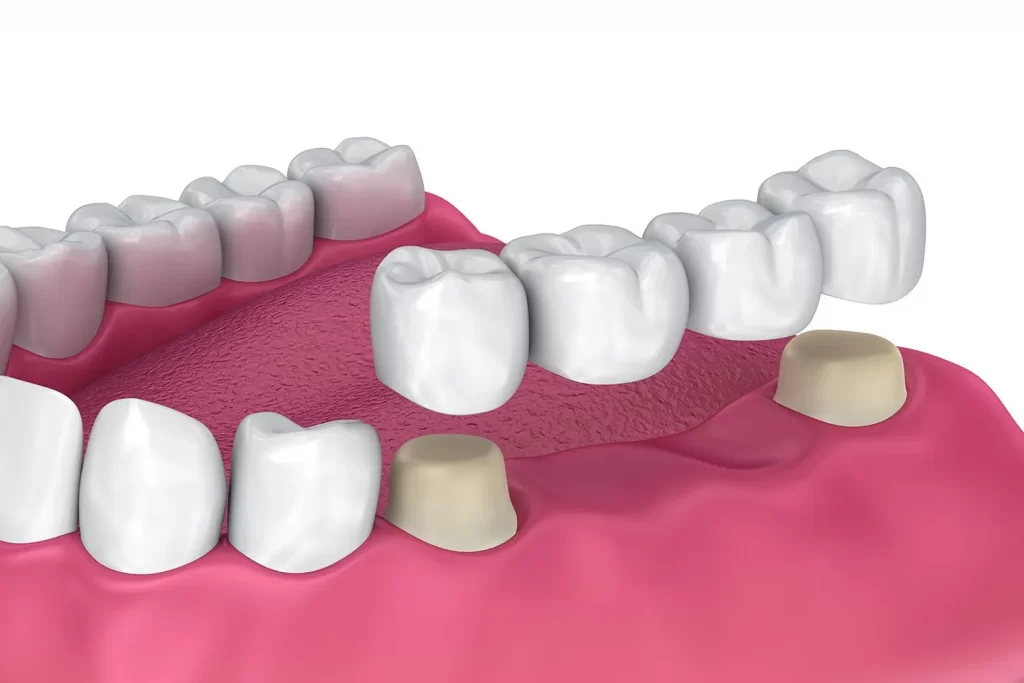
- Traditional Bridges
- Consist of one or more artificial teeth anchored to crowns on adjacent natural teeth.
- Commonly used when there are healthy teeth on both sides of the gap.
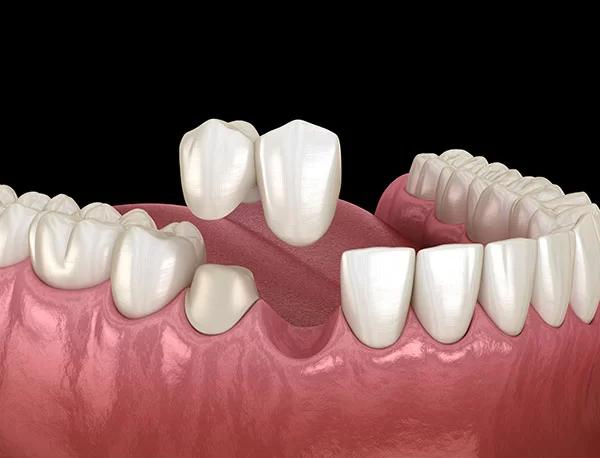
- Cantilever Bridges
- Anchored to only one adjacent tooth.
- Used when there is a healthy tooth on just one side of the missing tooth.
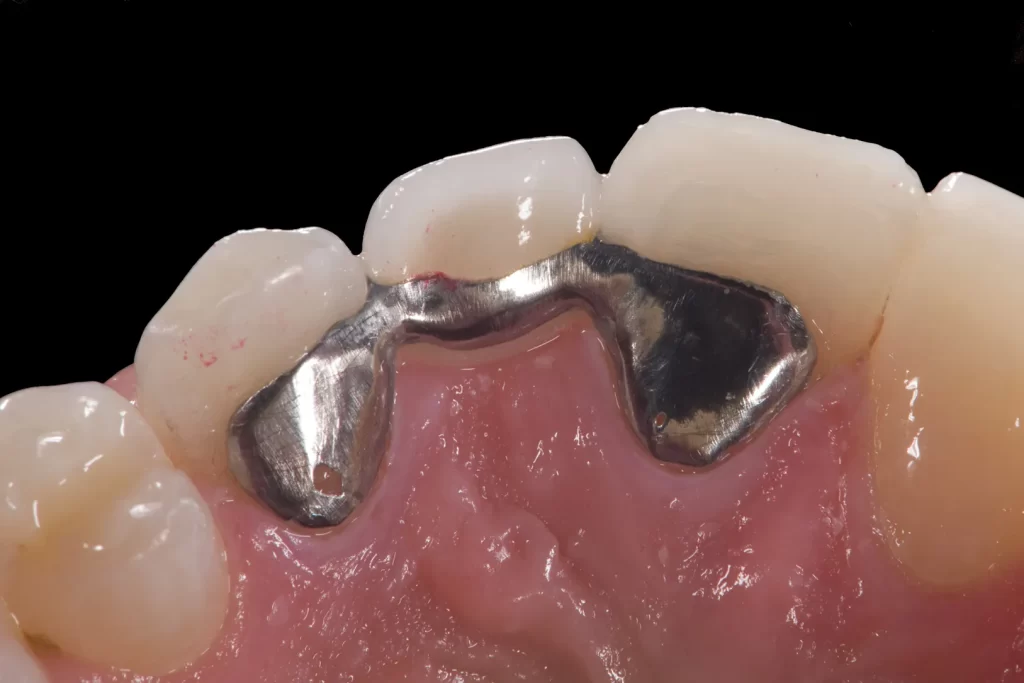
- Maryland (Resin-Bonded) Bridges
- Feature metal or porcelain frameworks bonded to the back of adjacent teeth.
- Less invasive, requiring minimal alteration to neighboring teeth.
- Implant-Supported Bridges
- Supported by dental implants instead of natural teeth.
- Ideal when multiple teeth are missing, providing stability and long-term durability.
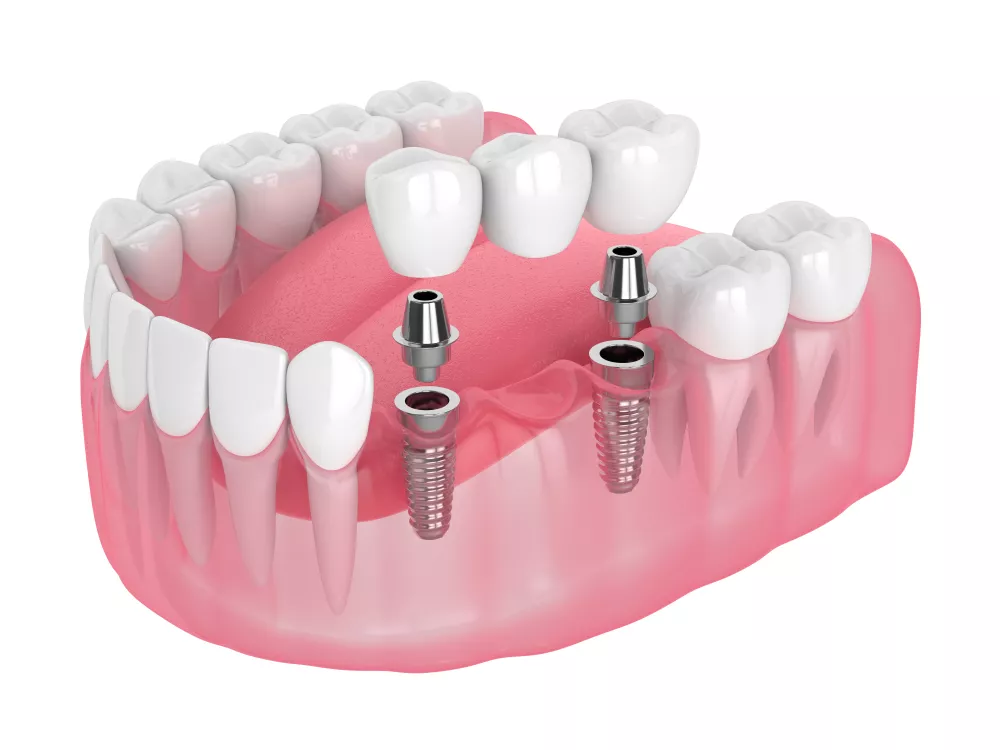
Advantage and disadvantage of bridges
Advantages of Dental Bridges
- Restore Function: Bridges help you chew and speak properly by filling the gap left by missing teeth.
- Improve Appearance: They restore your natural-looking smile and facial structure.
- Prevent Teeth Shifting: Bridges keep adjacent teeth from moving into the empty space, maintaining proper alignment.
- Long-Lasting Solution: With proper care, bridges can last many years.
- Quick Treatment: Dental bridges can often be placed faster than multiple implants.
Disadvantages of Dental Bridges
- Impact on Adjacent Teeth: Healthy teeth may need to be filed down to support a traditional bridge.
- Risk of Decay or Gum Disease: Improper cleaning under the bridge can lead to decay or gum problems.
- Limited Lifespan: Bridges may need replacement after 10–15 years due to wear or changes in the supporting teeth.
- Not as Strong as Implants: Bridges rely on adjacent teeth for support and may not be suitable for all patients.
How to Care for Your Dental Bridges
Proper care of your dental bridge ensures it remains functional, comfortable, and long-lasting. For patients looking for a Tooth Bridge Specialist in Mohali, regular dental check-ups and proper oral hygiene are essential to maintain the health of the bridge and surrounding teeth.
Tips for Caring for Dental Bridges:
- Maintain Excellent Oral Hygiene
Brush twice daily and floss carefully around and under the bridge to prevent plaque buildup. - Use Special Cleaning Tools
Floss threaders or interdental brushes can help clean areas beneath the bridge effectively. - Regular Dental Check-Ups
Visit your dentist every 6 months to check the bridge, clean professionally, and monitor oral health. - Avoid Hard or Sticky Foods
Limit foods that could damage or loosen the bridge, such as hard candies, ice, or sticky sweets. - Report Any Issues Promptly
If the bridge feels loose, causes discomfort, or shows signs of damage, contact your dentist immediately.
By following these steps, your dental bridge can last many years while keeping your smile healthy and confident.
Are you having health problems? Contact us today!
Address Business
Contact With Us
Book To Call : +918627069651
Working Time
Frequently Asked Questions
What is a dental bridge and how does it replace a missing tooth?
A dental bridge is a fixed restoration used to replace one or more missing teeth. It works by placing crowns on the teeth next to the gap, with an artificial tooth attached in between to “bridge” the empty space. Dental bridges help restore chewing ability, speech, smile appearance, and also prevent nearby teeth from shifting into the gap.
What types of dental bridges are available?
There are different types of dental bridges depending on the patient’s dental condition and the location of the missing tooth. Traditional bridges are the most common and use crowns on both sides of the gap for support. Cantilever bridges use support from only one adjacent tooth, while Maryland bridges use a more conservative bonding technique and are often used for front teeth. Implant-supported bridges are attached to dental implants instead of natural teeth and offer greater long-term stability.
How long does bridge treatment take?
A conventional dental bridge takes two appointments over 1–2 weeks. At the first visit, adjacent teeth are prepared, an impression is taken, and if required a temporary bridge is placed. At the second visit, once the permanent bridge is ready from the laboratory, it is fitted, adjusted for precise bite, and cemented. Oronova Dental Care follows a careful treatment process to ensure proper fit, function, and comfort.
Is bridge preparation painful?
Bridge preparation is performed under local anaesthesia and is generally comfortable. Some temperature sensitivity after crown preparation on the abutment teeth is normal for a few days. At Oronova Dental Care, dentists carefully check the bite before final cementation to help ensure proper comfort and function after the bridge is fitted.
Which is the better option: dental bridge or dental implant?
Dental implants may be preferred in many cases because they do not require alteration of adjacent healthy teeth, replace the missing tooth root, and can help preserve the jawbone. Bridges are non-surgical and can often be completed faster. The right choice depends on bone health, the condition of surrounding teeth, budget, and treatment timeline. Oronova Dental Care evaluates each case individually before recommending the most suitable tooth replacement option.

